
Import Students Seamlessly: A Complete Guide to Automated Student Enrollment with Exoclass
Streamline Enrollment with Exoclass Student Import Managing student data efficiently...
Guides


Art clubs are often born from a creative impulse — an enthusiastic teacher, a small community, and a desire to share artistic expression. In such environments, creativity naturally takes center stage, while administrative processes tend to remain in the background. Because of this, many organizers hesitate to adopt structured systems, fearing they might restrict the natural creative atmosphere that makes these communities special.
At the early stages, everything often feels manageable. Registrations come through messages, social media, or simple forms, and a dedicated art class registration page may not even exist as a structured part of the process. Schedules are stored in different files or notebooks, and after-school club payment processing is handled through bank transfers or cash. When the number of students is still small, this informal setup can appear to work well enough.
However, as participation grows, weaknesses in the system start to emerge. Schedule conflicts appear when multiple classes are accidentally planned at the same time. Some registration details get lost between messages and scattered files. Payment statuses become unclear, and information spreads across several communication channels. In these situations, even a well-run art club begins to feel the pressure of administrative complexity.
It is important to recognize one key point: the problem is not creativity. The problem is the lack of structure. This is why an art class management system should not be seen as a limitation, but as a foundation that allows creativity to thrive. When an art after-school club system connects registration, schedules, student management, and after-school club payment processing in one place, administration becomes far simpler. As a result, organizers can spend less time managing logistics and more time focusing on what truly matters — the creative process.
Registration is the first moment when a prospective participant interacts with the structure of the club. It is not simply a form or an administrative step. In reality, registration marks the beginning of a student’s journey — from initial interest to active participation in classes. That is why an art class registration page must be clear, intuitive, and designed to guide participants directly to the most suitable program.
Online registration available 24/7 allows parents or adult participants to sign up whenever it is convenient for them. When the registration process runs smoothly, the administrative workload decreases and the risk of losing information across messages or emails is minimized. An effective art after-school club system should clearly present different program options — such as groups organized by age, skill level, or creative focus.
Registration also needs to support different activity formats. Art clubs often organize not only regular classes but also short course cycles, creative workshops, or one-time educational sessions. The system should make it easy to register for these events while clearly displaying schedules, locations, and available spots in each group.
Offering the option to register for a trial class is also extremely useful. It allows participants to experience the activity before committing to a longer program, while organizers gain a better understanding of the student’s level and expectations.
An effective art class registration page should provide:

When registration is designed strategically, it becomes far more than an administrative step. It guides participants directly into the right group and ensures that the art after-school club system runs smoothly from the very first interaction.
In art clubs, the schedule is often seen as nothing more than a calendar. In reality, however, it represents the rhythm of the entire program. When classes cover different creative directions—such as painting, drawing, ceramics, or mixed creative workshops—the schedule must bring all these elements together into a clear and coordinated structure.
Group organization based on age and experience also needs to align with the real capacity of the program. Children’s classes, teen programs, and adult creative sessions often take place at different times, making it important to see the full schedule at a glance. Workshops and short course cycles add another layer of activity, introducing additional flexibility and movement within the timetable.
Teacher availability and studio space usage are equally important. If multiple classes are scheduled at the same time but rely on the same room or equipment, conflicts quickly appear. This is why an art after-school club system must make it possible to plan activities in a way that aligns classes, instructors, and available spaces within a single platform.
When the schedule is connected with registration and student management, administrators can see not only class times but also the real capacity of each group. This allows them to open additional classes when demand grows or adjust the schedule if some groups remain partially empty.
An effective art class management system should allow you to:
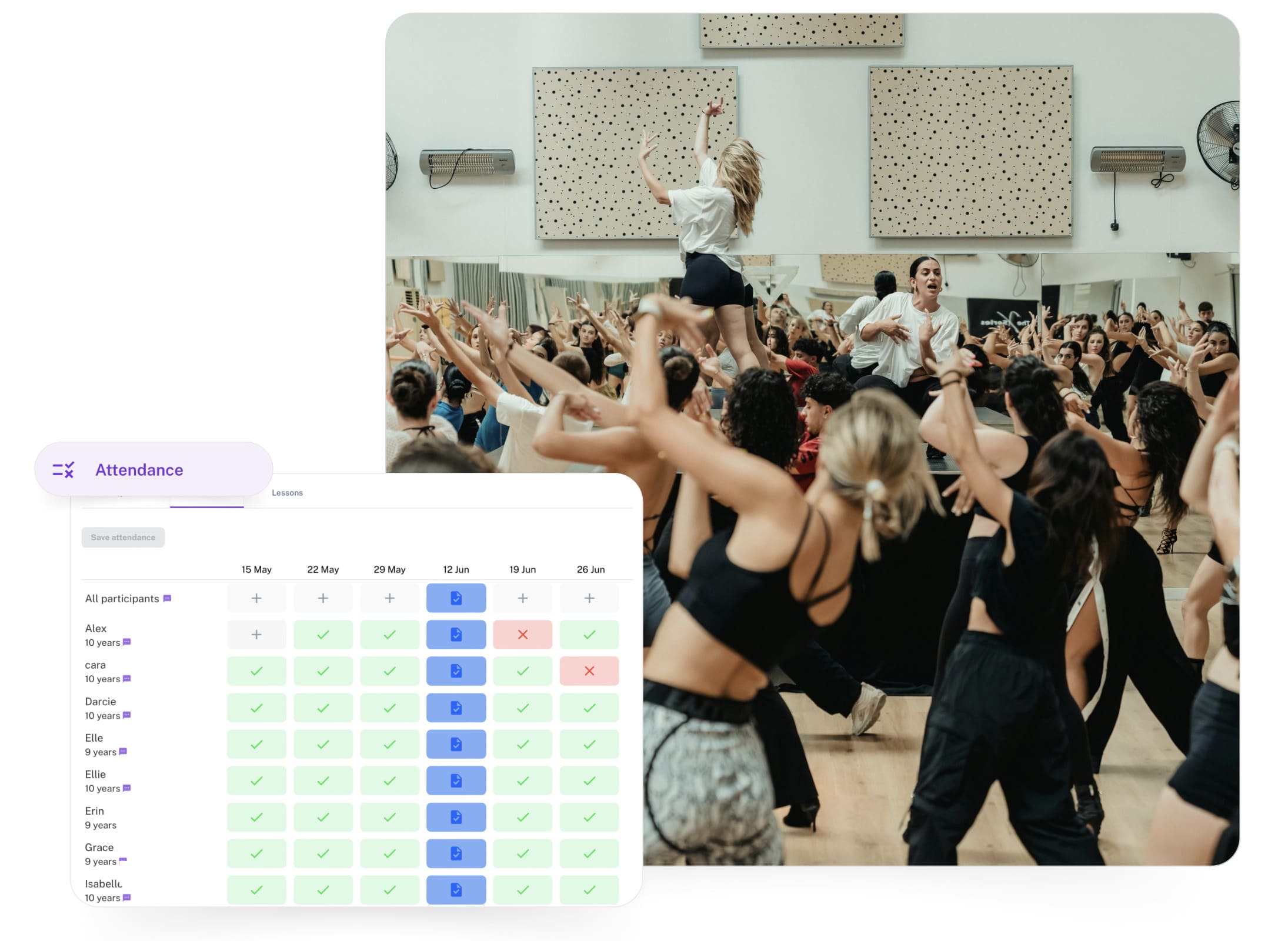
When the schedule operates in real time and is connected to the entire art class management system, creative activities become organized and stable. This type of structure allows an art club to grow without losing the creative atmosphere that makes it unique.
In creative environments, finances often take a secondary role. Yet even the most inspiring artistic activity cannot remain sustainable without a clear financial structure. In art clubs, stable financial management makes it possible to plan programs, support teachers, and develop long-term activities. This is why after-school club payment processing should be integrated into the overall art class management system.
Art clubs typically offer a variety of learning formats. Some participants enroll in ongoing courses, while others join short creative cycles or one-time workshops. Such diversity requires a payment structure that is both flexible and transparent. Art course packages allow organizers to plan a set number of classes in advance, while membership or subscription models make it easier for students to attend regularly without managing each payment individually.
Workshops usually function as one-time events, so their registration and payment process should be quick and straightforward. An integrated system allows participants to register and pay for their spot in a single step, while organizers can immediately see class capacity and attendance. Recurring payments help eliminate the need for constant reminders or manual tracking, and automated notifications significantly reduce the number of late payments.
When financial processes are integrated into the art after-school club system, administrators gain a clear overview of revenue streams. This makes it easier to plan new programs, forecast income, and support sustainable growth.
An effective art class management system should provide:
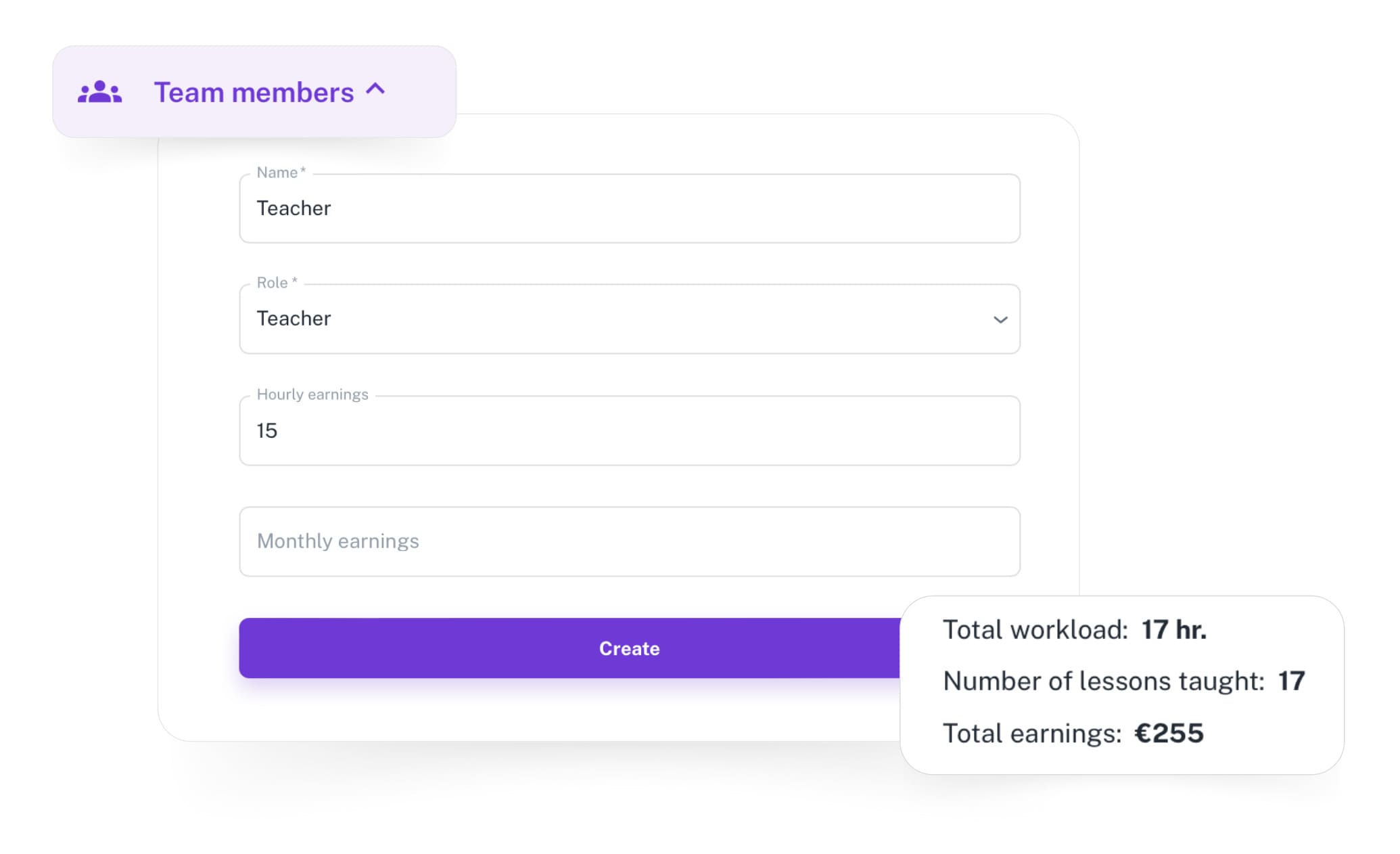
When payments run smoothly and are integrated into the art class management system, the organization can focus on creativity and program quality. Financial stability allows art clubs to plan for the future rather than constantly solving administrative uncertainties.
In art clubs, a student’s experience goes far beyond simply registering for classes. The creative journey develops over time—through lessons, projects, exhibitions, and personal progress. This is why an art class management system should help organizers see the entire journey of each participant, not just individual registrations.
Attendance tracking is one of the most important elements. It helps instructors and administrators understand how consistently a student participates and whether there is a risk of disengagement. When attendance is recorded within the system, the team can easily monitor participation and identify patterns that might require attention.
Course history is equally important. In many art clubs, students progress through different programs over time—from beginner drawing fundamentals to more advanced techniques or specialized creative courses. An art after-school club system should allow administrators to view which courses a student has completed and what experience they have already gained.
Participation in exhibitions or creative projects is another key aspect of student development. Recording this information helps build a student’s portfolio and demonstrates artistic progress over time. When this data is stored in one place, teachers gain a deeper understanding of each student’s strengths and can recommend appropriate next steps.
An effective art class management system should allow you to:
When student management is centralized, an art after-school club system becomes more than just an administrative tool. It provides a complete view of each student’s creative journey and helps art clubs build a consistent, long-term learning experience.
The real test of any system begins when a club starts to grow. When the number of participants is still small, many processes can be managed manually. But once more groups are added, more students enroll, and new creative directions appear, the administrative structure begins to feel the pressure. At this stage, it becomes clear whether an art class management system is simply a helpful tool or a true operational infrastructure.
Growth often starts with the addition of new teachers. As programs expand, the need for different specializations increases—drawing, painting, ceramics, or other creative disciplines. A system must make it easy to integrate a new instructor into the schedule, assign their programs, and see their availability within one platform.
The next stage usually involves new programs and more workshops. Creative education constantly evolves: new courses appear, short creative cycles are introduced, and special workshops become part of the program. If an art after-school club system is not flexible, every new activity turns into additional administrative work. An integrated structure allows new programs to be added to the same environment that manages registration, schedules, and after-school club payment processing.
Expansion may also include multiple locations. When classes take place in different studios or even different cities, maintaining a centralized data structure becomes essential. Registrations, schedules, payments, and student management should remain visible in one system so administrators can maintain a clear overview.
Another challenge comes with registration volume. Seasonal periods can double the number of new participants in a short time. Without automated registration and payment processes, the administrative workload quickly becomes overwhelming and the likelihood of errors increases.
When all processes are connected within a unified art after-school club system, growth becomes manageable. The system allows the organization to add more teachers, offer more courses, and handle a larger number of registrations without creating administrative chaos. This makes it possible for the creative community to expand while maintaining stability.
A creative environment should not mean administrative chaos. For art clubs to grow, organize more courses, and maintain a high-quality experience for students, they need a clear operational structure. EXOCLASS works as a centralized art class management system, bringing together registration, scheduling, student management, and after-school club payment processing in a single platform.
The system allows art clubs to manage all core activities in one place. An art class registration page enables new participants to easily find the right program and register online, while registrations automatically appear in the schedule and student management system. This reduces manual work and helps prevent lost registrations or communication errors.
Financial processes are also integrated into the same structure. After-school club payment processing takes place within one system, allowing administrators to see payment statuses in real time. This makes it easier to plan revenue, manage course packages, subscriptions, or workshop payments, and avoid financial uncertainty.
Student management is equally important. EXOCLASS allows organizations to store attendance data, course history, and student progress within a unified database. This gives the studio a full overview of each student’s creative journey—from the first registration to participation in exhibitions or advanced programs.
EXOCLASS helps ensure:
An effective art after-school club system allows organizations to focus on what matters most—creativity, student development, and community building. When registration, payments, and student management work together in one structure, administration becomes a seamless part of the process rather than a constant challenge.
👉 Book a demo and see how the EXOCLASS art class management system can help your club grow without administrative chaos.