
Why Clear After-School Club Pricing and a Transparent Financial Model Matter
After-school club pricing is often treated as a technical detail...
EXOCLASS
Growth


Many sports organizations start out simply—with Excel spreadsheets, separate registration forms, and standalone payment solutions. At the early stage, this may work well enough. However, as membership grows, this fragmented structure quickly becomes a limitation rather than support. When sports after-school club registration takes place on one platform while after-school club invoice payment is handled on another, administration shifts its focus from growth to fixing errors.
It is often assumed that expansion slows down because of market conditions or competition. In reality, growth more frequently stalls due to administrative overload. The more participants you have, the more communication, data management, invoicing, and schedule coordination are required. If a sports club management system is not built for scale, each new member proportionally increases the administrative burden. As a result, the organization begins to limit its own growth—not because of lack of demand, but because of operational constraints.
This is why quality criteria must be evaluated in advance—before reaching a breaking point. A sports club management platform should be designed not only for current needs, but also for future scenarios: more groups, additional locations, and higher registration volumes. It must function as operational infrastructure, connecting registration, finance, and data management into one clear structure. Only then does the system move beyond being an accounting tool and become a true foundation for organizational growth.
Read more about how to know when you need an administrative system for your club in this article.
Organizational growth should not mean proportionally increasing administrative chaos. If every new group requires hiring another person to manage registrations, payments, and communication, the issue lies not with the team—but with the system. A sports club management system must be built to handle a growing number of members without performance slowdowns and without adding manual workload.
As teams, coaches, or locations expand, processes must remain centralized. Sports after-school club registration should not turn into a collection of separate forms and Excel files. After-school club invoice payment should run automatically—not through manual reminders and separate bank statement checks. When a system operates in a fragmented way, every seasonal peak—whether September enrollment or camp season—turns into a crisis instead of an opportunity.
A system is ready for growth when new participants do not proportionally increase administrative workload.
Signs That a Sports Club Management Platform Is Ready for Expansion:

When all these elements operate within a unified framework, a sports club management system becomes more than an administrative tool—it becomes solid infrastructure for sustainable, long-term growth.
Growth without a clear data structure always carries risk. When information about members, registrations, and payments is scattered across different files or platforms, the organization starts operating on assumptions rather than facts. A professionally built sports club management system must ensure a unified database where all data is stored centrally and consistently.
Real-time visibility is a critical quality indicator. Leadership should be able to see at any moment how sports after-school club registration is progressing, how much revenue has already been collected, and which payments are still pending. If after-school club invoice payment status updates automatically, the financial picture becomes clear and predictable. Without this level of oversight, growth becomes unstable because decisions are made without accurate data.
Data Indicators That Show a Sports Club Management Platform Is Ready for Growth:
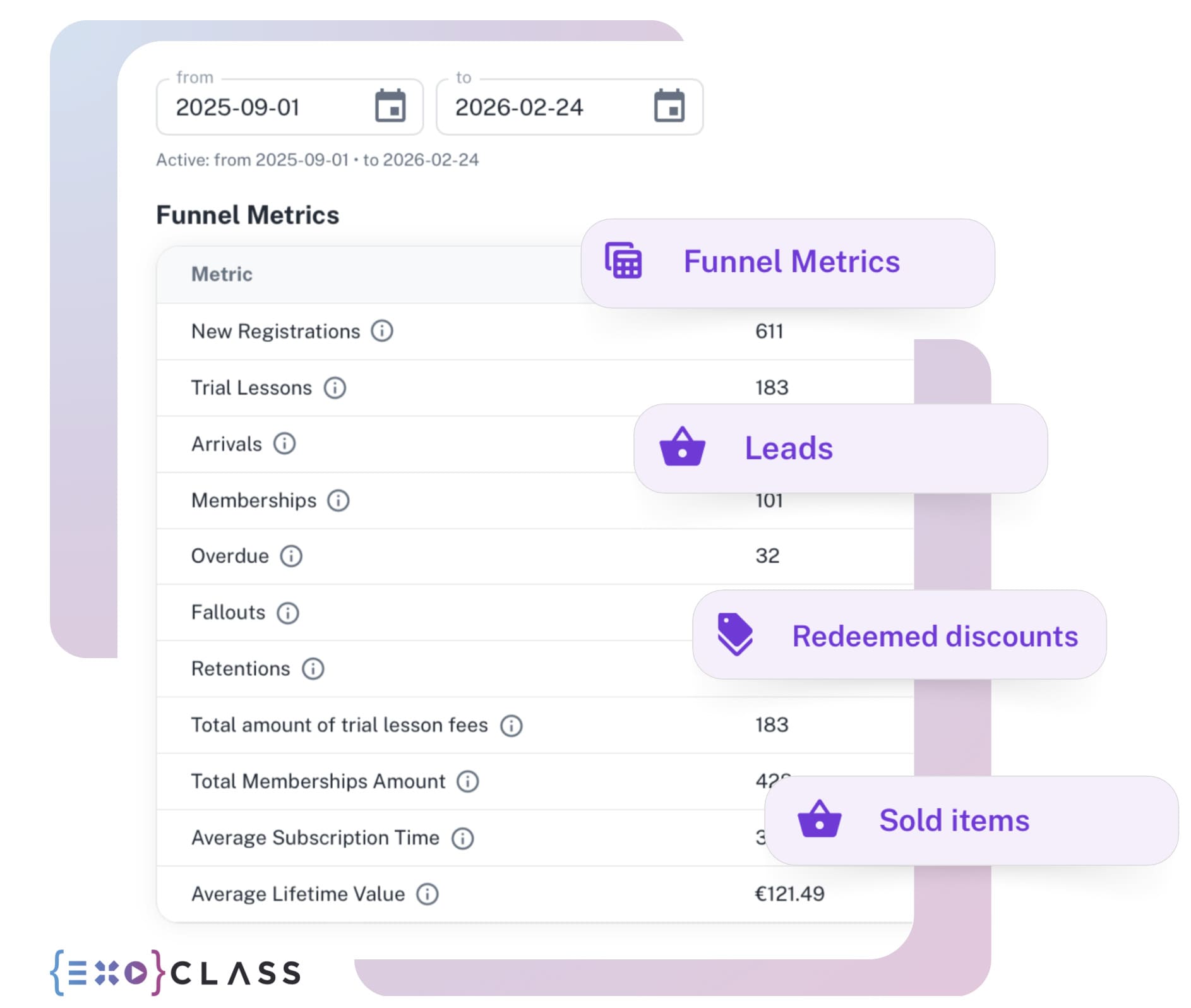
When all these indicators are accessible within one platform, a sports club management system becomes more than an administrative tool—it becomes the foundation for strategic decision-making. A system must enable leaders to rely on data rather than intuition. Only then can growth be stable and strategically managed.
A growing organization cannot rely on manual processes. The more participants you have, the more registrations, payments, reminders, and schedule adjustments must be handled. If all of this is done manually, growth will inevitably slow down. That is why automation becomes one of the key indicators showing whether a sports club management system is truly ready for expansion.
Online sports after-school club registration with integrated payment processing immediately reduces administrative workload. When an invoice is generated automatically during registration and after-school club invoice payment is completed within the same flow, there is no need for additional reminders or manual data entry. Automated payment reminders help maintain steady cash flow, while invoice generation happens without extra effort. Schedule change notifications and attendance tracking should also operate within the system—not through separate tools or disconnected platforms.
Automation means the system works for the organization, not the other way around. The more processes are connected and run independently, the easier it becomes to scale operations without losing control.
A sports club management system is ready for growth if it automatically manages:
When all these processes function within a unified sports club management platform, the organization can increase participant numbers without increasing complexity. Automation becomes not just a convenience, but a fundamental requirement for sustainable, long-term growth.
Technology within an organization should be used naturally—not tolerated out of necessity. If staff avoid the system or bypass it with additional tools, the issue is not with the people, but with the platform itself. A high-quality sports club management system must be intuitive and clear for administrators, coaches, and parents alike. The simpler the interface, the faster it becomes part of everyday operations.
In a growing organization, it is especially important that new team members can quickly understand how the system works. If a new administrator requires extensive training just to manage basic processes, it signals unnecessary complexity. A sports club management platform should allow users to handle everything—from sports after-school club registration to monitoring after-school club invoice payment—without complicated instructions or workarounds.
Technical support and system stability are equally critical. As an organization grows, tolerance for errors decreases. Even a minor technical issue can affect dozens or hundreds of families. The system must be regularly updated, secure, and reliable.
Signs That a System Is Suitable for Long-Term Growth:
When these criteria are met, a sports club management system becomes a dependable foundation for growth. Technology should help the organization move forward—not introduce additional risk.
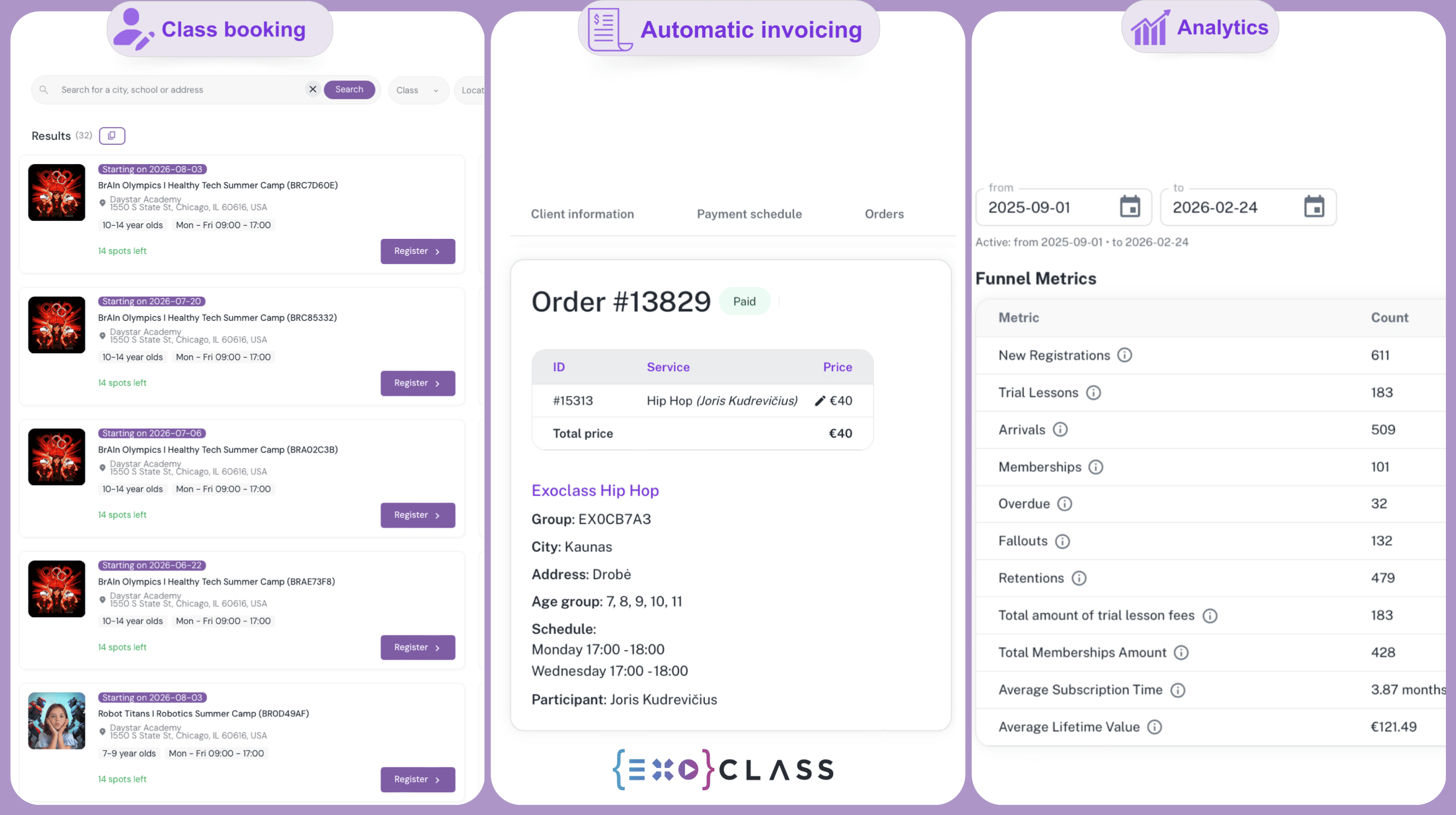
When discussing readiness for growth, it is not enough to define quality criteria—it is equally important to understand how they are implemented in practice. EXOCLASS operates as a centralized Sports Club Management System, connecting registration, finance, scheduling, and data analytics into one unified structure. This allows organizations to manage all core processes within a single platform, avoiding fragmentation and the need for additional tools.
EXOCLASS ensures seamless sports after-school club registration with integrated payments. Invoices are generated during registration, and after-school club invoice payment is processed centrally and visible in real time. This enables administrators to accurately track revenue streams and plan budgets without manual reconciliation. Real-time analytics provide clear insights into occupancy rates, attendance, and financial performance, allowing decisions to be driven by data rather than assumptions.
The system also enables effective control of schedules and group capacity. The sports club management platform supports student data management within a unified database, ensuring structured and transparent operations. Whether an organization runs a single club or multiple branches across different locations, the framework remains consistent. This makes it possible to grow without expanding administrative staff.
Why EXOCLASS Meets the Criteria of a Growth-Ready System:
A system is truly ready for growth when it allows leaders to focus on expansion, partnerships, and quality improvement—not on correcting errors or managing manual processes. That is the infrastructure EXOCLASS is designed to provide.
Discover how EXOCLASS can help centralize sports after-school club registration, automate after-school club invoice payment, and build a solid foundation for long-term growth.
👉 Book a demo and see how a professional sports club management platform can become the engine of your organization’s growth.