
Art Club Administrative System – How to Combine Creativity with Efficient Student Management
Art clubs are often born from a creative impulse —...
EXOCLASS


The number of swim schools is growing, and with that growth comes increasing administrative complexity. More children mean more groups, more instructors, more schedules, and more payments to manage. Seasonality makes the challenge even greater—waves of registrations, constant reshuffling, ongoing adjustments. If a swim after-school club is still being managed through Excel spreadsheets and scattered emails, student management quickly turns chaotic.
Manual processes inevitably lead to mistakes: overcrowded groups, empty spots, missed payments. At the same time, parents expect fast, 24/7 online registration and instant confirmation for swimming lessons. If the process feels complicated, the decision is simple—they choose another school.
That’s why a swim school registration system today is not just a convenience. It’s infrastructure. It allows you to control occupancy rates, forecast revenue, and ensure smooth, scalable growth. Automation becomes essential if the goal is a stable, profitable, and professionally managed swim after-school club.
For many schools, the issue isn’t demand—it’s process. When a swim after-school club is small, manual administration may seem manageable. But as soon as student numbers increase, the lack of a structured swim school registration system becomes a critical weakness. Manual group formation doesn’t just complicate daily operations—it directly limits business growth.
1.1 Groups Are Formed “Manually”
In most cases, an administrator assigns children to groups based on age and skill level using emails or spreadsheet notes. Every new registration triggers another adjustment: moving one child, rebalancing another group, coordinating with an instructor’s schedule. Student management turns into constant reshuffling instead of a structured system.
Common situations include:
Each “small adjustment” consumes time and increases the risk of error.
1.2 Inefficient Use of Capacity
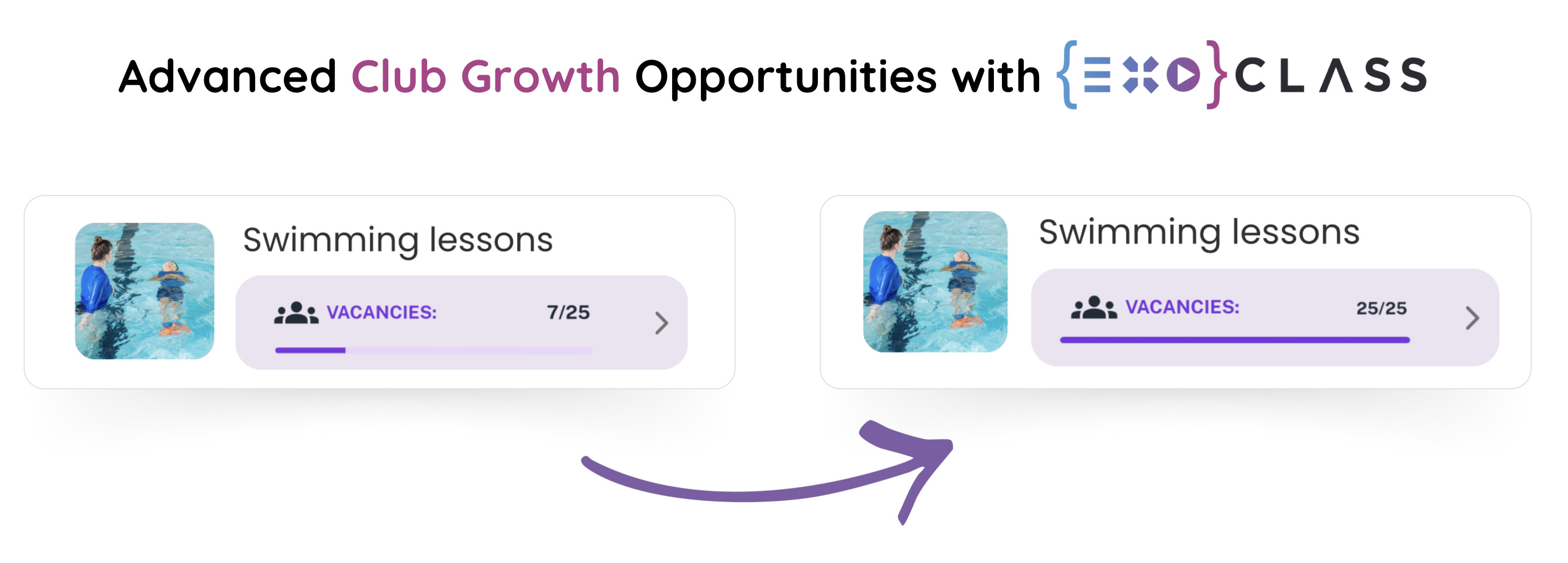
Pool time is a limited and expensive resource. Without automated logic to control group limits and occupancy, imbalance becomes inevitable.
Every empty spot is directly lost revenue.
Every overcrowded group is a risk to reputation and client retention.
1.3 Payment Chaos
Another sensitive area is payments. When student management and financial processes are not integrated, administration turns into a marathon.
This doesn’t just exhaust the team—it directly impacts cash flow.
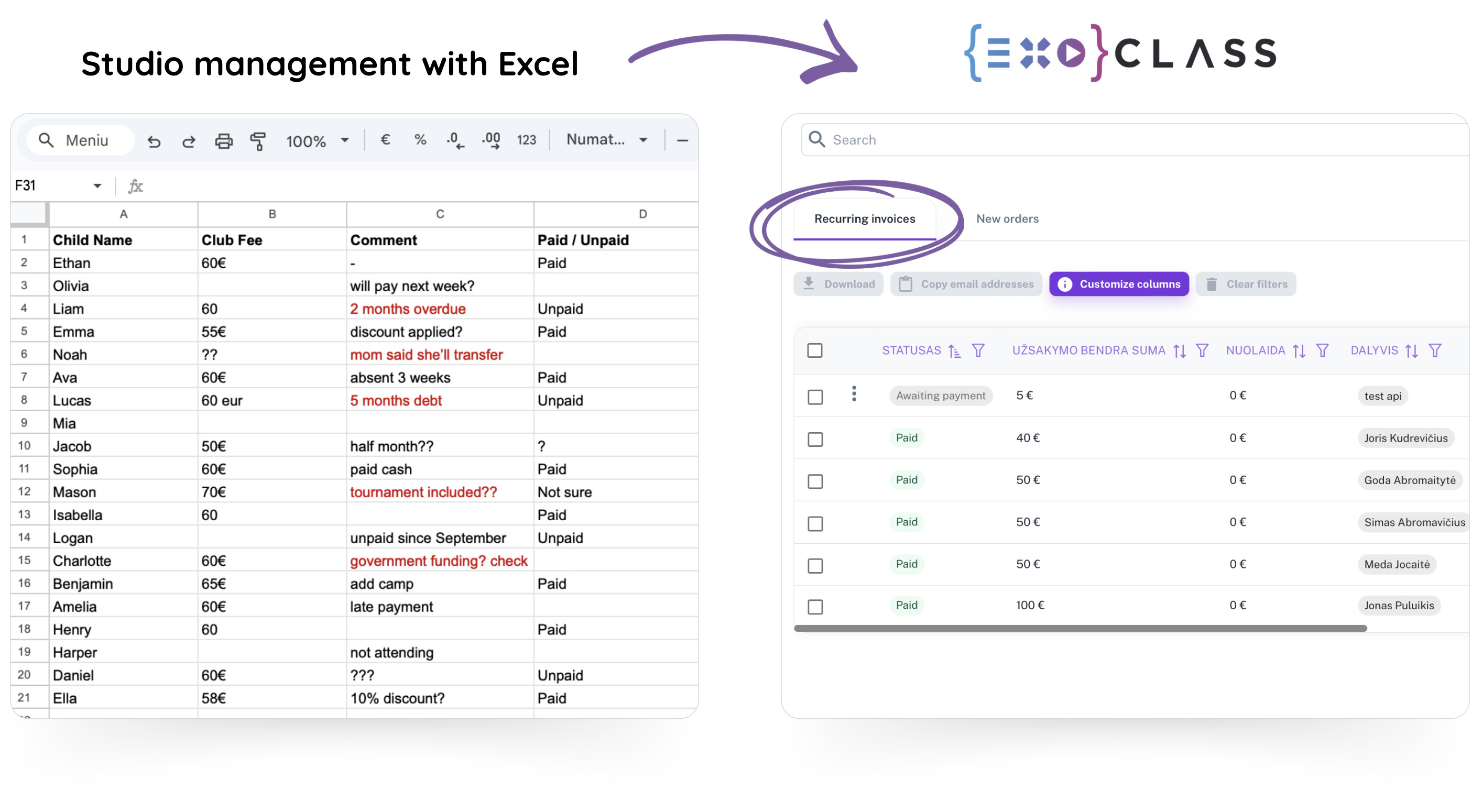
If even a dozen families delay payment for swimming lessons each month, the total becomes significant by the end of the year. Add administrative hours, errors, and unpaid spots, and the true cost becomes clear.
Manual processes cost:
This is not just an operational issue—it’s a strategic one.
If a swim after-school club wants to grow, it cannot be managed the way it was ten years ago. Without an automated swim school registration system, growth becomes slow, expensive, and risky.
Read more about managing after-school club debt with EXOCLASS in this article.
When we talk about automation, many people picture a simple online registration form. But a modern swim school registration system is far more than a contact collection tool. It is a complete operational engine that connects registration, student management, group control, and finances into one clear, structured system.
An automated system first means that registration happens where it is most convenient for the customer—online, at any time of day. Parents can see all available time slots, groups, and pricing, and immediately select the right swimming lessons for their child. There is no need to wait for an email response or call the administrator. A 24/7 registration page becomes the first sign of professionalism.
However, the real difference lies in the internal logic.
A modern system includes:
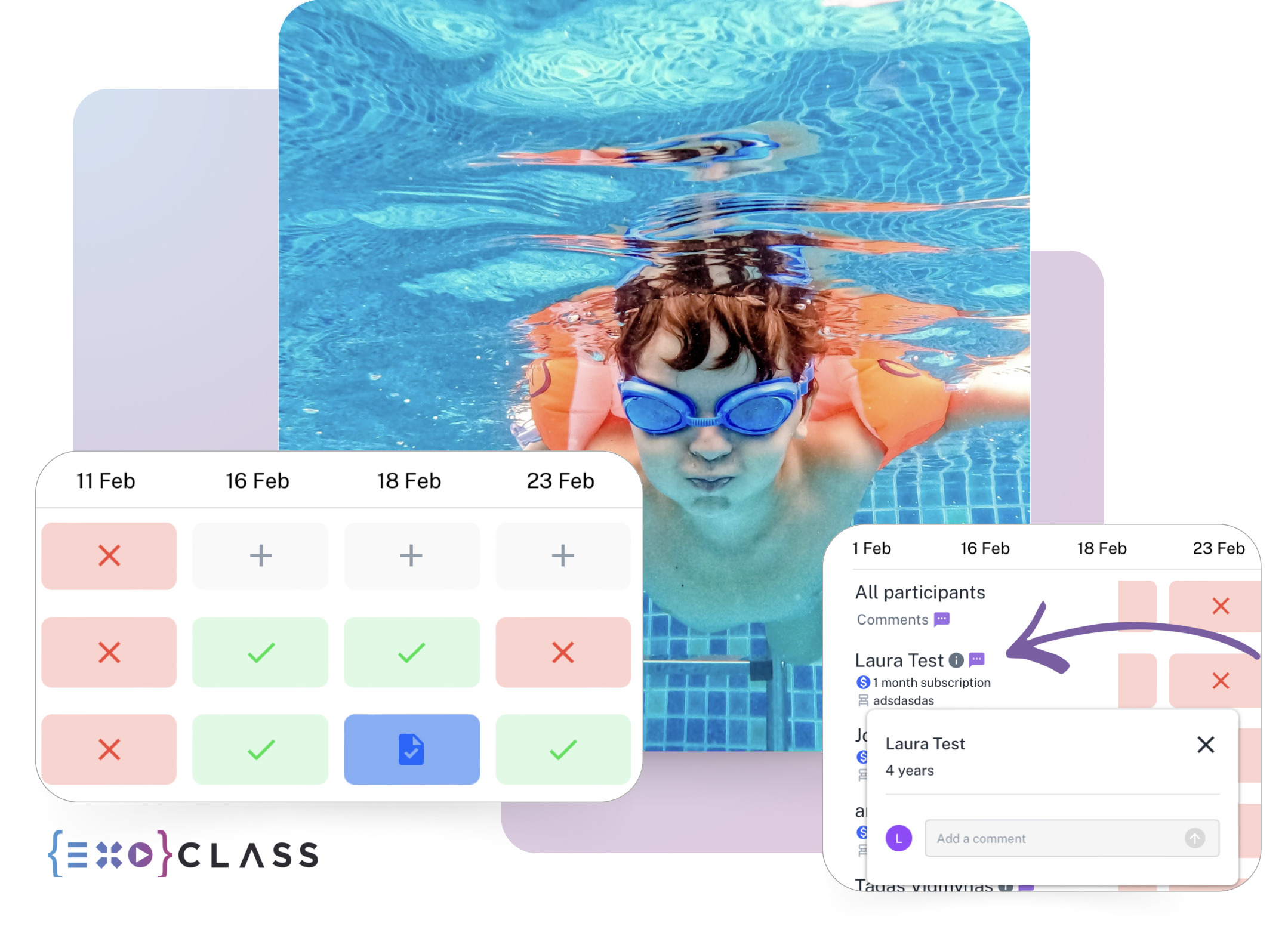
Most importantly, a swim school registration system doesn’t just register students—it analyzes and controls operations. It allows you to see in real time which groups are full, where spots are still available, and what revenue is projected for the upcoming month. Student management becomes centralized instead of scattered across multiple documents.
This system is not just a technological convenience—it is the structure that allows a swim after-school club to grow without chaos. When processes run automatically, leadership can focus on quality, instructor development, and long-term strategy. And that is what separates a steadily growing swim school from one constantly stuck solving operational issues.
For a director, features don’t matter—results do. How much will this increase revenue? How much chaos will it reduce? How much time will it free up for strategy? A modern swim school registration system should be evaluated through clear KPIs, not technical specifications.
Below are the core metrics directly impacted by automation.
1. Group Fill Rate
Without a structured system, it’s difficult to see in real time which swimming lessons are full and where spots remain open. Registrations come in through different channels, data is updated manually, and decisions are often delayed.
An automated system:
Even a 5–10% improvement in seasonal fill rate can translate into thousands in additional revenue.
This is a direct link between system efficiency and business growth.
2. Revenue Per Lesson
When groups are balanced and capacity is optimized, revenue per swimming lesson increases. A centralized system makes it clear which groups generate strong returns and which operate at marginal profitability.
This enables leadership to:
Data-driven student management replaces intuition with strategic decision-making.
And strategic decisions lead to higher profitability.
3. Late Payment Rate
Manual payment tracking almost always results in delays. Reminders are sent too late, and outstanding balances get lost in spreadsheets.
An integrated swim school registration system:
Lower late payment rates mean more stable cash flow.
Stable cash flow means safer, more predictable growth.
4. Administrative Work Hours
One of the most expensive yet invisible resources is team time. When a swim after-school club is managed manually, administrators spend a significant portion of their week on:
With automation, these hours drop dramatically. Time previously spent on operational tasks can be reinvested into improving lesson quality and enhancing the customer experience.
This is not just an efficiency gain—it’s a strategic shift in focus.
5. Client Retention Rate
Convenience is now a competitive advantage. When registration is simple, payments are transparent, and communication is timely, parents are far more likely to stay.
A modern system:
A better experience directly influences loyalty and referrals.
And long-term retention is significantly more profitable than constantly acquiring new clients.
A swim school registration system doesn’t improve just one metric—it creates overall operational stability. Higher fill rates increase revenue. Fewer late payments stabilize cash flow. Reduced administrative workload frees up time for growth initiatives. Improved customer experience strengthens retention.
Automation is not merely convenience—it is a structural profitability driver.
For a swim after-school club aiming for sustainable growth, data-driven student management and an integrated registration system are no longer optional tools—they are essential business infrastructure.
EXOCLASS is not just another registration form. It is a comprehensive swim school registration system designed to help a swim after-school club grow without operational chaos. The platform combines online registration, automated group formation, integrated payments, and centralized student management in one place. This means all swimming lessons, group capacity limits, instructor schedules, and payments are visible in real time.
With EXOCLASS, you can:
When processes are automated, leadership can focus on lesson quality, instructor development, and long-term growth. That’s what allows a swim school to move from manual management to structured, scalable growth.
🚀 Want to see how this would work for your swim school?
Book a free EXOCLASS demo and discover how a modern swim school registration system can increase occupancy, stabilize revenue, and simplify student management.