
Automate Club Invoicing: 5 Reasons to Stop Manual Billing Today
Are you a club manager exhausted by manual invoicing processes?...
EXOCLASS


When dance studios begin to grow, their first instinct is often to look for a “better calendar.” It seems logical that a more convenient scheduling tool would solve most operational issues. In reality, however, the challenge lies not in the schedule itself, but in the structure behind it. If the process architecture is weak, even the most modern calendar will not prevent operational chaos.
Most studios start simply—with Excel spreadsheets, Google Forms, and separate payment solutions. When student numbers are small, this model can still “work.” A dance after-school club registration page might be just a basic form, and dance class payment may be handled manually through bank transfers. But as registrations increase, the weaknesses of this setup quickly become visible.
Scheduling conflicts appear first—double bookings, overlapping classes, and inaccurately assigned groups. Late payments follow, due to the lack of automated reminders and clear financial oversight. Information gets lost in email threads and scattered files, while communication errors begin to impact the studio’s reputation. At this stage, it becomes clear that the problem is not in one isolated function, but in the entire system.
An effective dance after-school club management system must address the structure as a whole—connecting registration, payments, scheduling, and communication into one unified framework. Only then does a dance after-school club system become operational infrastructure rather than just an administrative tool. True efficiency emerges when processes are designed to support growth smoothly—without adding extra staff and without constantly “putting out fires.”
In many dance studios, the schedule is viewed as a simple timetable. In reality, it forms the foundation of the studio’s revenue model. The way groups are structured, how studio space is utilized, and how teachers are assigned affects not only daily operations but also overall financial performance.
Groups divided by age, level, or dance style must be built strategically. A group that is too small represents lost revenue potential, while a group that is too large risks compromising quality. Optimizing studio space ensures that infrastructure is used efficiently, maximizing return on fixed costs. At the same time, teacher schedules and workload must be balanced to prevent burnout and avoid underutilized time.
Waiting lists should not be treated as passive overflow. When properly managed within a dance after-school club management system, they become a growth indicator—highlighting which classes should be duplicated or expanded. This becomes especially important during seasonal peaks, such as September enrollment or performance preparation periods, when registration volume can multiply. Without structure, these moments create chaos. With the right system, they create opportunity.
An effective system must allow you to:
When scheduling is connected to the dance after-school club registration page and dance class payment, it becomes more than an organizational tool. It becomes a strategic revenue optimization mechanism. That is how a professional dance after-school club system enables a studio to grow by increasing efficiency—not chaos.
Registration and finance are the lifeblood of a dance studio. If the dance after-school club registration page does not function smoothly, potential enrollments are lost. If dance class payment is unclear or not automated, financial uncertainty quickly follows. Stability begins at the very first point of contact—where a client interacts with the system.
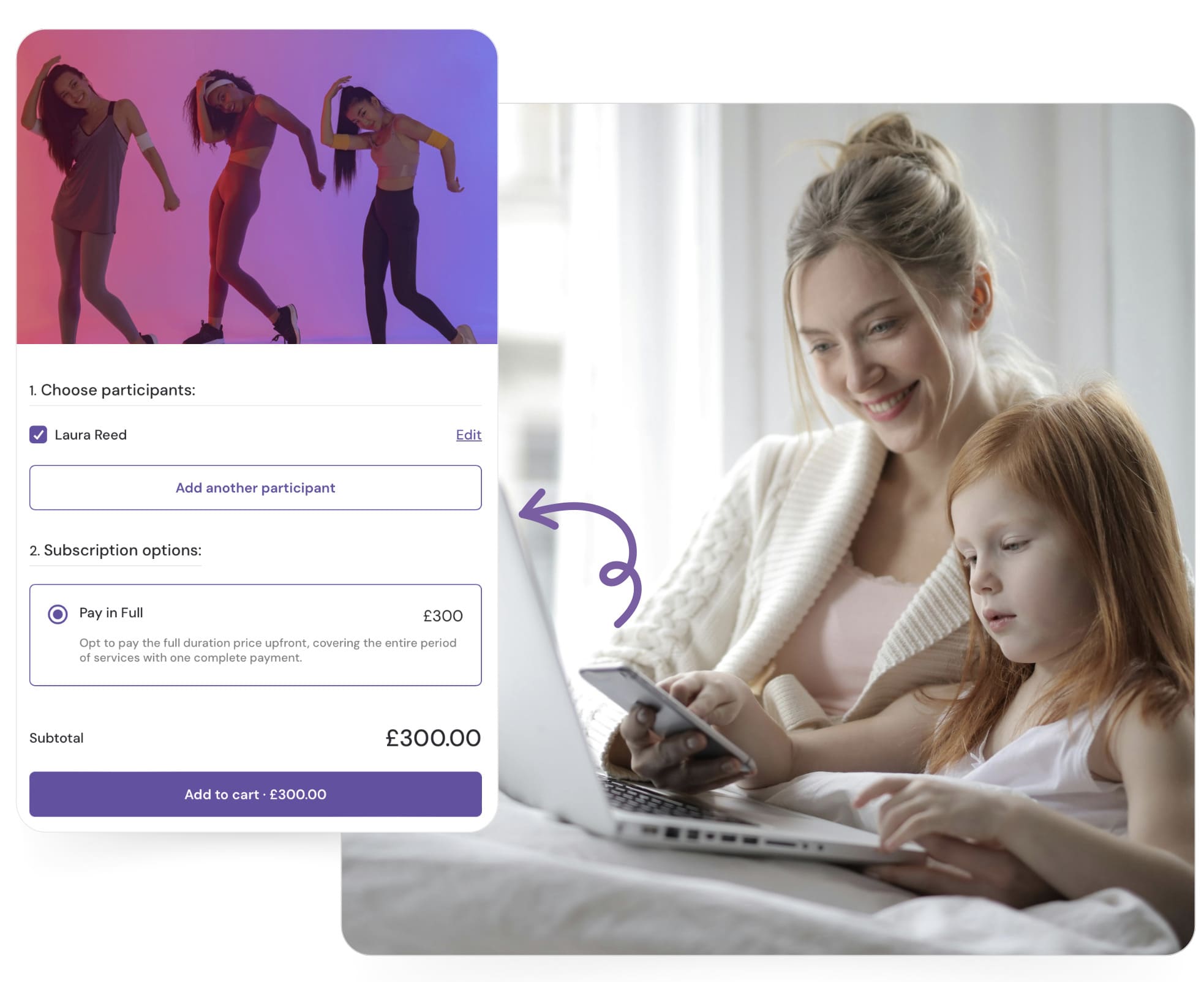
Online registration available 24/7 allows parents and adult participants to sign up at their convenience. Trial classes can be integrated into the same process, making it easier to convert interest into long-term membership. Subscription models, class packages, or seasonal plans must be clearly structured and automatically administered. Only then does a dance after-school club management system become more than an administrative tool—it becomes part of the studio’s financial model.
Automated reminders and integrated payment tracking significantly reduce late payments. But beyond convenience lies business logic. What is the true cost of one late payment? It is not just delayed revenue—it is administrative time spent sending reminders, reconciling bank statements, and managing communication. How many hours per month are lost to manual tracking? And how much value could those hours generate if invested in marketing or program development instead?
When a dance after-school club system automates registration and payments, cash flow becomes predictable. Leaders gain a clear financial overview, enabling smarter investment planning and data-driven decisions instead of guesswork. Automation does more than improve convenience—it strengthens stability and empowers the studio to grow without financial volatility.
As long as decisions are driven by intuition, a dance studio operates primarily as a creative space. When decisions are guided by data, it becomes a business. If you cannot clearly see attendance numbers, revenue performance, and class occupancy rates, you are managing blindly. Growth without visibility is always a risk.
Attendance analysis reveals which groups are truly stable and where participants tend to drop out after a few months. Class occupancy rates show whether studio space is being fully utilized or whether potential revenue is left untapped. Revenue analysis by program highlights which styles or levels generate the highest value. Calculating customer lifetime value helps determine how much a single student contributes over time—and how much it makes sense to invest in acquiring new members.
Dropout trends are equally important. When do students most often discontinue classes? After how many months? Is it linked to seasonality, pricing, or program structure? Without this data, decisions become guesswork.
This is not about generating reports for the sake of reports. It is about answering strategic questions:
An effective dance after-school club management system must not only collect data but transform it into a decision-making tool. When a dance after-school club system provides real-time visibility into attendance, revenue, and trends, studio leaders can act strategically rather than reactively. That is the moment when a creative initiative evolves into a sustainable, predictable business.
True efficiency is not revealed when a studio has 80 students—but when that number grows to 200 or 400. Expansion is the moment when it becomes clear whether a dance after-school club management system is merely a convenient tool or a real operational infrastructure. If every new group requires hiring another administrator, the issue lies not with the team—but with the system itself.
New locations or programs should not require building a new administrative structure from scratch. If you open a second studio or introduce a new dance style, all information should remain within one unified environment. A professional dance after-school club system must ensure that a 2× increase in registrations—or seasonal peaks, especially in September—can be handled without chaos. Without centralized data architecture, growth becomes risky as information fragments across files, accounts, and staff members.
During expansion, it is especially critical that the dance after-school club registration page and dance class paymentprocesses operate seamlessly. The larger the volume, the more automation shifts from being optional to essential. Manual processes simply cannot withstand increased load during high-growth periods.
A system is ready for growth if:
When these conditions are met, a dance after-school club management system becomes a growth catalyst rather than a bottleneck. Only then is expansion strategically managed, allowing studio leaders to focus on creativity, program quality, and community development—instead of constantly solving operational problems.
Instead of focusing on a list of features, it is more important to understand the system logic behind them. EXOCLASS is built as a unified operational architecture, where each module supports the others and forms one cohesive dance after-school club management system. Below are the key components and their real business impact.
Centralized management.
All information—groups, schedules, teachers, finances, and client data—is managed within one platform. This eliminates the need to work across separate files or disconnected tools. Centralization reduces errors, accelerates decision-making, and ensures that every team member works with the same up-to-date data.
Integrated registration and payments.
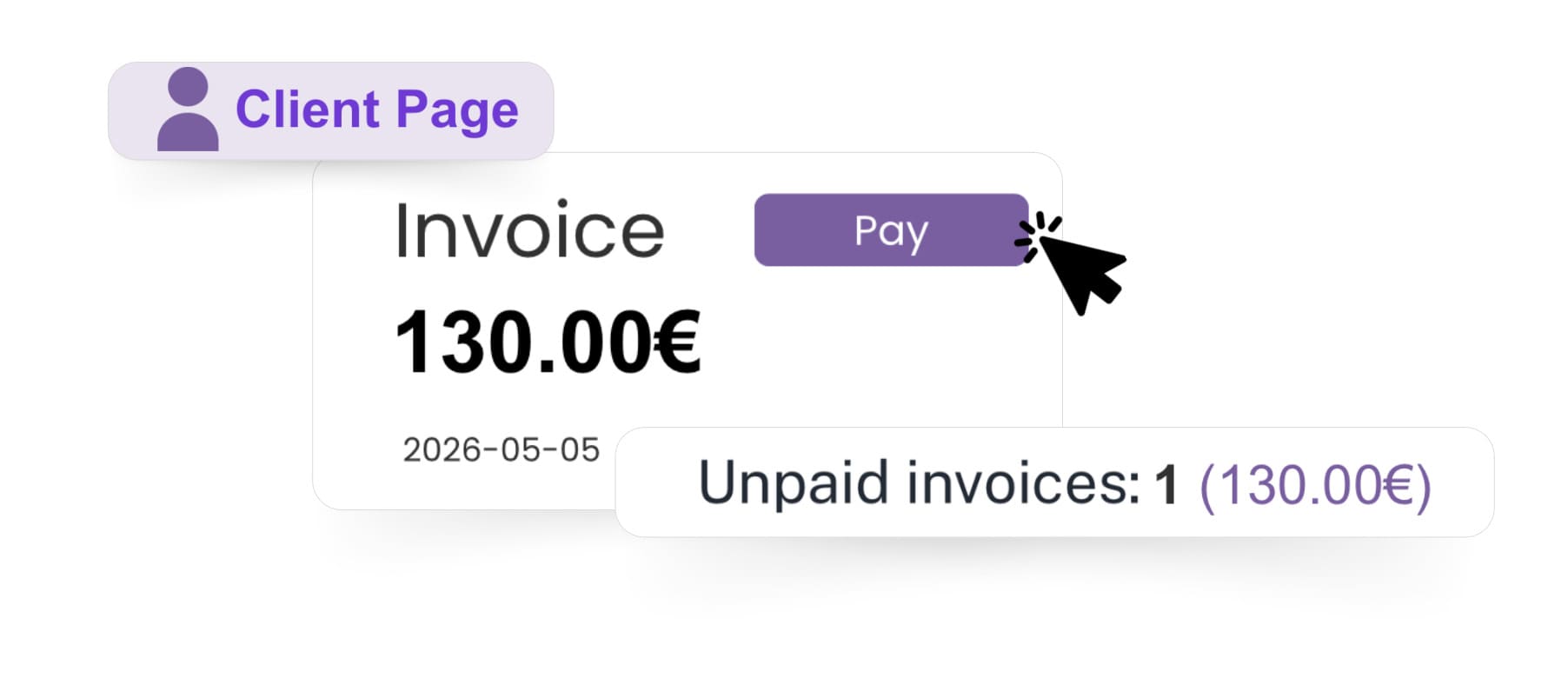
The dance after-school club registration page operates in sync with scheduling and capacity management, while dance class payment is fully integrated into the same workflow. Invoices are generated automatically during registration, payment status updates in real time, and administrators no longer need to manually reconcile bank statements. This creates predictable cash flow and financial clarity.
Real-time analytics.
The system provides immediate visibility into occupancy rates, revenue trends, and registration dynamics. Leaders can identify which programs are growing, which are slowing down, and where untapped potential exists. Decisions are based on data rather than intuition.
Attendance tracking.
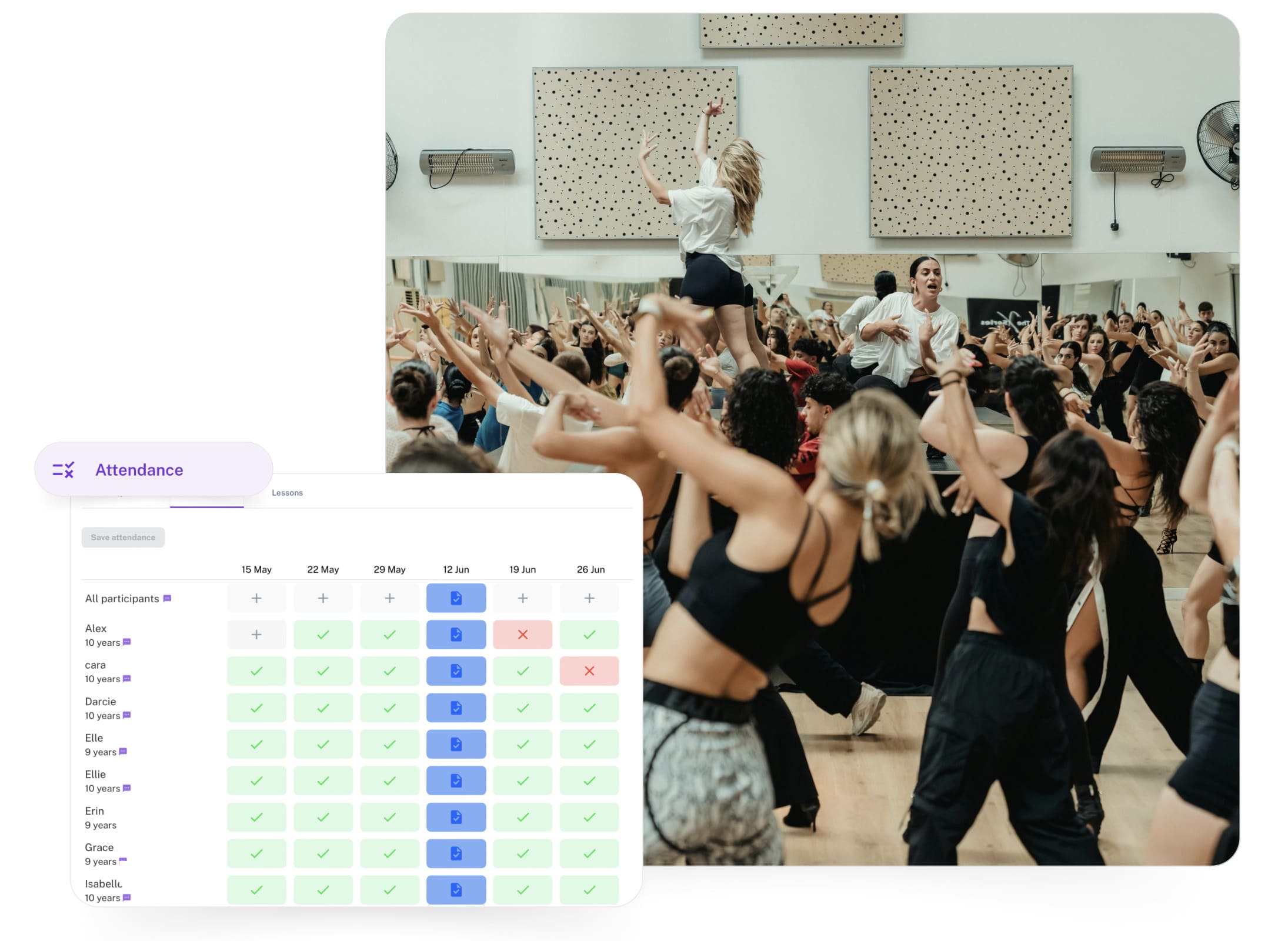
Participant attendance is recorded within the system, allowing studios to monitor engagement levels and detect potential dropout trends early. This enables timely action—such as adjusting group placement, refining programs, or strengthening communication. Attendance data also supports schedule and group size optimization.
Communication module.
All notifications about schedule changes, events, and payment deadlines are sent centrally. The system allows segmentation by group or program, ensuring that messages reach only the relevant audience. This reduces information overload and minimizes misunderstandings.
Growth without additional administrative burden.
New groups, programs, or even locations can be integrated into the same structure. The dance after-school club systemis designed so that participant growth does not proportionally increase administrative workload. Automated processes help maintain control even during rapid expansion.
An effective dance studio management system is not just a technological solution—it is business architecture. It allows leaders to focus on creativity and program quality rather than constantly fixing operational issues.
Get to know the EXOCLASS team and learn more about us in this article.
Discover how a professional dance after-school club management system can connect registration, dance class payment, attendance tracking, and communication within one platform—without increasing administrative workload.
👉 Book a demo and see how the EXOCLASS dance after-school club system can become the solid infrastructure for your studio’s growth.